One of the fastest ways to delay a visa application is to submit the wrong paperwork with the right intentions. If you are asking what documents for Canada visa applications require, the honest answer is that there is no single checklist that fits everyone. The exact documents depend on why you are coming to Canada, how long you plan to stay, your country of residence, your travel history, and whether an officer needs more proof that your application is genuine.
That is where many people get stuck. They gather passports, photos, bank statements, and invitation letters, then assume that more paperwork means a stronger case. Sometimes it does. Sometimes it creates confusion. A good application is not about uploading everything you have. It is about submitting the right documents, in the right format, with a clear story behind them.
What documents for Canada visa applications usually include
Most Canada visa applications start with a core group of documents. These are the basics that help immigration officers confirm your identity, your purpose of travel, and whether you are likely to follow the conditions of your stay.
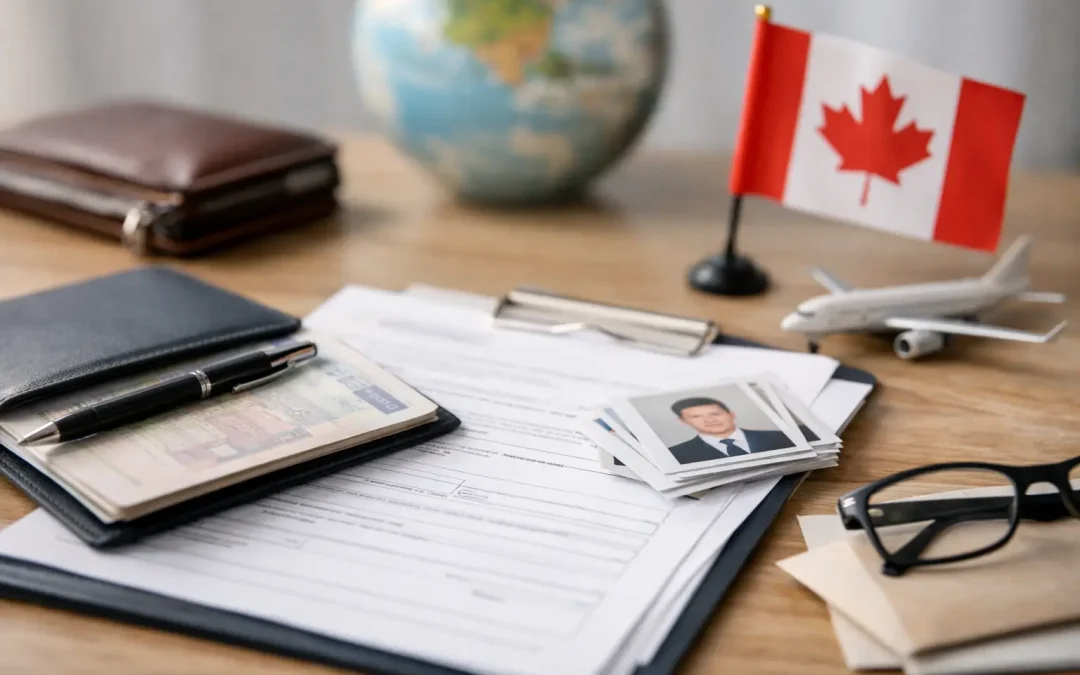
You will usually need a valid passport, application forms, digital photos that meet immigration specifications, and proof that you can financially support yourself during your stay. Depending on the category, you may also need travel history, family information, a letter of explanation, proof of employment, and documents showing ties to your home country.
For many applicants, biometrics are also part of the process. In some cases, you may be asked for a medical exam or police clearance certificate. These are not always required at the start, but they can become necessary based on your nationality, your time spent in certain countries, the type of visa you are applying for, or the length of your intended stay.
The key point is simple. There are general documents, and then there are case-specific documents. Both matter.
The documents change by visa type
A visitor visa does not require the same evidence as a study permit. A work permit does not look the same as a family sponsorship file. This is why generic online checklists often cause trouble – they miss the details that actually drive decisions.
Visitor visa
For a visitor visa, officers usually want to see that your trip makes sense and that you will leave Canada at the end of your authorized stay. That often means a passport, travel itinerary if available, proof of funds, employment documents, recent bank statements, and evidence of family or financial ties outside Canada.
If someone in Canada is inviting you, an invitation letter can help, but it is not magic by itself. It works best when it is supported by proof of the inviter’s status in Canada, their address, and a clear explanation of your relationship and the purpose of the visit.
Super visa
A super visa application usually needs additional family-based and insurance-related documents. Parents and grandparents applying under this category generally need proof of their relationship to the child or grandchild in Canada, proof that the host meets the required income threshold, and valid medical insurance that meets program rules.
This is a common area where one missing document can hold up the whole file. Insurance documents, notices of assessment, and family relationship proof need to line up clearly.
Study permit
For a study permit, the center of the application is your letter of acceptance from a designated learning institution. You also need proof that you can pay tuition, living expenses, and return travel. Officers often look closely at your academic background, your current employment or education situation, and whether your study plan makes sense.
A strong study permit file often includes transcripts, diplomas, language test results if relevant, bank records, sponsor documents if someone else is paying, and a well-written statement explaining why this program fits your career path. If the course appears unrelated to your background, your explanation becomes even more important.
Work permit
Work permit documents depend on the stream. Some applicants need a job offer and a Labor Market Impact Assessment, while others apply under LMIA-exempt categories. In either case, you may need employment contracts, employer support letters, education credentials, resume, professional licenses, and proof that you meet the job requirements.
If the work permit is tied to a spouse, an international student, or another principal applicant, then relationship documents and the principal applicant’s status documents also become important.
Permanent residence pathways
Permanent residence applications usually require the most detailed documentation. This may include passports, birth certificates, marriage certificates, education credential assessments, language test results, police certificates, work reference letters, proof of settlement funds, and civil status documents.
Here, accuracy matters as much as completeness. A job title that does not match your duties, a missing salary detail, or inconsistent dates across forms can create serious issues.
Supporting documents matter more than people think
A lot of refusals happen not because the required documents were missing, but because the supporting evidence was weak. A bank statement may show money, but if a large amount appeared suddenly without explanation, an officer may question whether the funds are really available to you. An employment letter may confirm your job, but if it is vague, unsigned, or missing contact details, it may carry less weight.
This is where a well-prepared file stands apart. Supporting documents should answer the officer’s likely concerns before they become objections. If your travel history is limited, your ties to your home country may need stronger proof. If a relative is paying for your education, their financial records and relationship proof should be clear. If you have a past refusal, your current file should directly address what has changed.
Translation, notarization, and document quality
If your documents are not in English or French, they generally need certified translations. In some cases, copies may also need notarization or proper certification. This part is often treated as a formality, but poor translations and unclear scans can create avoidable problems.
Every document should be readable, consistent, and professionally presented. Names, dates of birth, passport numbers, and addresses should match across the application as much as possible. If there is a mismatch because of spelling differences, name changes, or older records, it should be explained clearly rather than ignored.
Common mistakes when preparing documents for a Canada visa
The most common mistake is assuming the checklist is enough on its own. Checklists tell you what to submit, but they do not always tell you how an officer will interpret those documents.
Another mistake is submitting generic letters. A travel purpose letter, invitation letter, or explanation letter should be specific to your case. It should connect the documents, not repeat them. Officers are reviewing many files, often quickly. If your application only makes sense after guesswork, that is a risk.
People also run into trouble by using outdated forms, uploading expired documents, hiding previous refusals, or sending financial records that do not match their claimed income. Even small inconsistencies can affect credibility.
How to know what documents you actually need
The right way to answer what documents for Canada visa applications require is to start with your category, then look at your personal situation. Are you visiting family, studying, working, or applying for permanent residence? Are you married, sponsored, self-employed, or recently refused? Are your documents in another language? Are you relying on personal savings or a sponsor?
Those details shape the final document list. Two people applying for the same visitor visa may need very different supporting evidence because one is a salaried employee with strong travel history and the other is self-employed with limited international travel. The application category is the starting point. Your profile determines the strategy.
That is why many applicants benefit from a document review before submission. A professional review can catch weak areas early, identify missing proof, and help you present your case with less stress and fewer surprises. For families, students, workers, and applicants with past refusals, that extra clarity can make a real difference.
At Jenish Immigration, this is often where confidence starts – not with promises, but with a file that is organized, credible, and built around your actual goals.
Canada visa applications are not won by paperwork alone. They are approved when your documents work together to tell a clear, believable story. If you focus on relevance, consistency, and quality from the beginning, the process becomes far more manageable, and your next step feels a lot less uncertain.