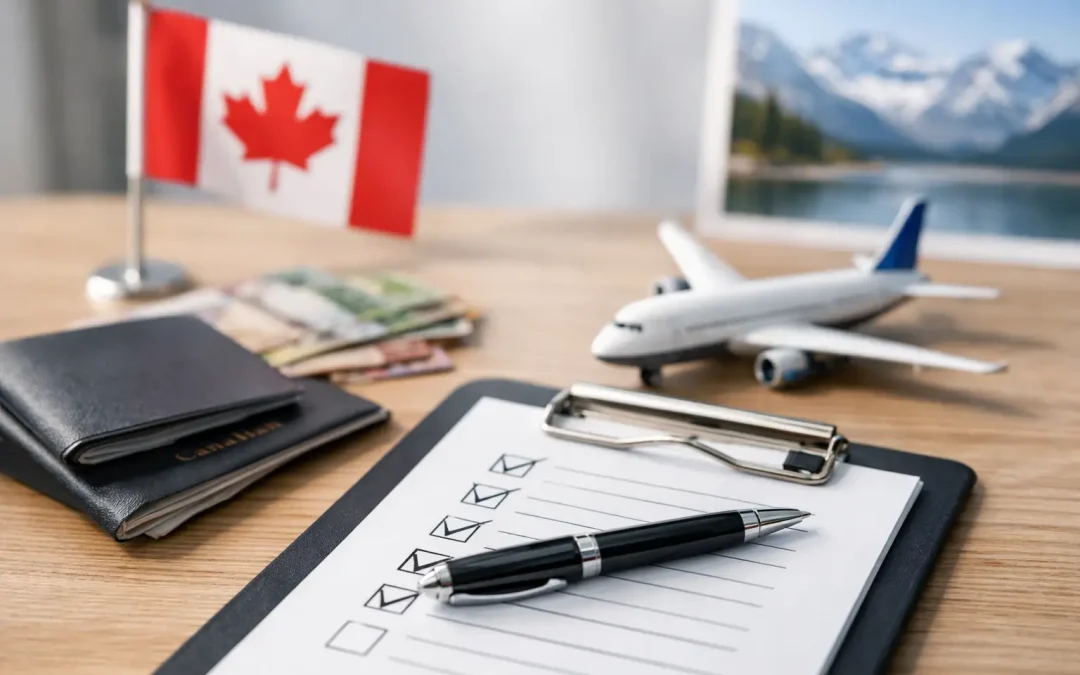
A visitor visa refusal often comes down to one thing – the documents did not tell a clear, credible story. That is why a solid visitor visa document checklist Canada applicants can follow is not just about collecting papers. It is about showing who you are, why you are traveling, how long you will stay, and why you will return home after your visit.
If you are visiting family, attending an event, taking a short trip, or exploring Canada for tourism, your application should feel complete and easy to understand from the officer’s point of view. Strong documents reduce doubt. Weak or inconsistent documents create questions, and questions can lead to delays or refusals.
Why the visitor visa document checklist Canada matters
Many applicants assume a passport and bank statement are enough. In reality, visitor visa applications are assessed on credibility, purpose, financial capacity, and ties to your home country. The exact documents can vary depending on your background, travel history, family situation, and the reason for your trip.
That is where people get into trouble. They submit generic paperwork, overlook small inconsistencies, or provide documents that do not support the main purpose of travel. A well-prepared file is not necessarily the thickest file. It is the one that answers the officer’s likely concerns before they become problems.
Core documents for a Canada visitor visa application
Most applicants should start with the same basic foundation. Your valid passport is essential, and it should have enough validity for your travel period. You will also need the required visa application forms completed accurately and consistently, along with passport-style photographs if requested for your application stream.
Proof of funds is another key part of the file. This can include recent bank statements, savings records, fixed deposits, pay stubs, tax documents, or proof of business income. The goal is not simply to show money in an account. You need to show that the funds are genuinely available to support the trip and make sense in light of your employment or financial background.
You should also prepare evidence of your travel purpose. For tourism, that may include a travel itinerary, hotel reservations, and a basic trip plan. For family visits, it may include an invitation letter, proof of the inviter’s status in Canada, and documents showing the relationship. If you are attending a wedding, business meeting, graduation, or family event, include documents tied directly to that occasion.
Travel history can help as well. Previous visas, entry stamps, and records of lawful travel to countries such as the United States, United Kingdom, or Schengen countries may support your credibility. It is not mandatory to have an extensive travel history, but if you do have it, use it.
Proof of ties to your home country
This is one of the most important sections in any visitor visa document checklist Canada applicants should take seriously. Officers want to see why you are likely to return home after your visit.
Employment documents are often central here. If you are employed, include an employment letter confirming your role, salary, start date, and approved leave. Recent pay stubs can strengthen that evidence. If you own a business, include registration documents, tax filings, business bank statements, and proof of active operations.
Family ties matter too. A spouse, children, or dependent parents in your home country can support your case, especially when the documents clearly show those relationships. Property ownership, lease agreements, ongoing education, or other commitments may also help, but only if they are presented in a relevant and organized way.
It depends on the case. A young single applicant with limited travel history may need stronger evidence of work, study, or family commitments. A retired parent visiting children in Canada may rely more on family structure, finances, and a realistic visit plan.
Supporting documents from your host in Canada
If someone in Canada is inviting you, their documents can make a difference. An invitation letter should explain who they are, their relationship to you, why they are inviting you, how long you will stay, and whether they will provide accommodation or financial support.
The host should also provide proof of status in Canada, such as a passport, PR card, study permit, or work permit, depending on their situation. Proof of address and financial documents may also help, especially if they are covering part or all of your expenses.
Still, an invitation letter alone does not guarantee approval. The applicant must remain the center of the file. Officers are still assessing whether the visitor is genuine, financially credible, and likely to leave Canada at the end of the authorized stay.
Financial documents that actually help
Not all financial documents carry the same weight. Large recent deposits without explanation can raise concerns. Borrowed money presented as personal savings can weaken the application. A stronger approach is to provide a realistic picture of your finances over time.
Recent bank statements are useful when they show stable income and account activity. Salary slips, tax returns, pension statements, or business earnings help explain where the money comes from. If a family member is sponsoring your trip, that should be documented clearly with both their financial records and an explanation of the support.
The amount you need depends on the length and nature of the visit. There is no single magic number. What matters is whether the funds look sufficient and believable for the planned trip.
Common mistakes on a visitor visa document checklist Canada applicants should avoid
A lot of refusals are preventable. One common mistake is submitting inconsistent information across forms and documents. If your employment dates, travel dates, or family details do not match, the file starts to lose credibility.
Another problem is weak purpose-of-visit evidence. Saying you are visiting for tourism without any itinerary, hotel planning, or explanation is often not enough. The same goes for family visits supported only by a short invitation letter with no relationship proof.
Applicants also hurt their cases by overloading the file with irrelevant documents. More is not always better. Ten pages of unrelated paperwork will not fix one key missing document. Clear, relevant, and organized evidence works better than volume.
Poor document quality is another issue. Unclear scans, untranslated records, expired documents, or incomplete pages can slow processing or damage the application. Every document should be readable, current, and easy to understand.
How to make your application stronger
Think of your application as a full narrative rather than a checklist exercise. Your documents should support each other. If you say you are employed, your employment letter, pay stubs, and bank statements should align. If you say you are visiting your sister for two weeks, the invitation letter, relationship proof, and travel dates should match.
A short explanation letter can also help when your case needs context. This is especially useful if you have a previous refusal, unusual travel timing, self-employment income, a recent job change, or someone else is funding the trip. The purpose of the letter is not to argue. It is to clarify.
Accuracy matters more than people expect. Even small errors can create avoidable concerns. That is why many applicants prefer professional support, especially when they have a prior refusal, complex finances, family sponsorship elements, or limited travel history. A well-reviewed application can save time, stress, and repeated filing costs.
When your checklist needs to be customized
There is no one-size-fits-all document set. Parents visiting children in Canada often need a different approach than young professionals traveling for tourism. Business visitors may need employer letters, meeting details, and conference information. Applicants being funded by relatives need a clear sponsorship paper trail.
If you were previously refused, your next application should not just repeat the same file with one extra document. It should address the refusal reasons directly and rebuild the application around stronger evidence. That is where experience matters. Firms such as Jenish Immigration look at the case the way an officer would, which can make a meaningful difference when the stakes are high.
Final document check before you submit
Before submission, review your passport validity, form accuracy, travel dates, financial proof, and supporting documents from your host if applicable. Make sure names, dates, and relationship details are consistent everywhere. If any document is not in English or French, certified translation may be required.
Then ask one simple question: does this file make sense to someone reading it for the first time? If the answer is yes, you are in a far better position than applicants who submit disconnected paperwork and hope for the best.
A visitor visa is temporary, but the decision can affect important family moments, travel plans, and peace of mind. Taking the time to prepare the right documents now can make the whole process feel a lot less uncertain.