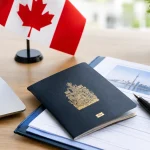

A Canadian work permit can be the bridge between a job offer and a new life in Canada, but the right application depends on far more than finding an employer. Your occupation, current immigration status, family situation, work history, and the employer’s readiness to support the process can all affect which path is available.
For many applicants, the challenge is not simply completing forms. It is proving that the job is genuine, the documents are consistent, and the proposed stay in Canada meets immigration requirements. A well-planned application helps reduce avoidable delays, refusals, and the stress of having to start again.
What Is a Canadian Work Permit?
A work permit is a document issued by Immigration, Refugees and Citizenship Canada that allows a foreign national to work legally in Canada for a specific period. It is not the same as a visa. Depending on your nationality, you may also need a temporary resident visa or an electronic travel authorization to travel to Canada.
Most work permits fall into two main categories: employer-specific work permits and open work permits. The best option depends on your circumstances, and not every applicant can choose between them.
An employer-specific permit allows you to work only for the employer named on your permit, usually in a stated role and location. Before applying, the employer may need a positive Labour Market Impact Assessment, commonly called an LMIA. This document shows that hiring a foreign worker is unlikely to negatively affect Canadian workers. Some jobs are LMIA-exempt under international agreements, provincial programs, intra-company transfer rules, or other public-policy categories.
An open work permit is more flexible because it can allow you to work for most Canadian employers. It is available only in specific situations, such as for eligible spouses or common-law partners of certain workers and students, some international graduates, and applicants in select permanent residence streams. Even an open permit has conditions, and it may restrict work in industries where medical examinations are required.
Choosing the Right Work Permit Path
The strongest strategy starts with the right category. A job offer alone does not automatically qualify someone for a work permit, and an LMIA is not required in every case. Looking at the full picture early can prevent an employer and applicant from investing time in the wrong process.
Employer-Specific Permits
This route often suits workers who have a confirmed Canadian offer in a role where the employer can obtain an LMIA or use a recognized LMIA-exempt category. The employer’s responsibilities matter. They must provide accurate information about the job, wages, duties, and working conditions, and they may need to pay compliance fees or advertise the position before an LMIA application is submitted.
Applicants should make sure the job title, duties, salary, and location are consistent across the offer letter, employment contract, LMIA documents, and work permit application. Small differences can raise questions. If your experience does not reasonably match the role, include clear evidence of your qualifications, such as employment letters, education records, licenses, or professional certifications.
Open Work Permits
Open permits can offer valuable flexibility for families. For example, an eligible spouse may be able to work in Canada while their partner studies or works in an approved category. Graduates of eligible Canadian institutions may qualify for a post-graduation work permit, which can provide Canadian experience that supports a future permanent residence plan.
However, eligibility rules change and can be highly specific. The length and type of a spouse’s study or work authorization, the student’s program, the worker’s occupation, and the timing of an application can all matter. Never assume that a spouse or dependent child will receive the same status automatically.
Documents That Make or Break a Work Permit Application
A work permit application should tell one clear, credible story. Officers review whether the employment is legitimate, whether you meet the requirements of the category, and whether you will respect the conditions of temporary residence.
Your document package may include a valid passport, digital photo, completed forms, job offer and contract, LMIA or LMIA-exemption details, proof of work experience, education documents, financial evidence, and family documents where applicable. Some applicants must also provide biometrics, complete an immigration medical exam, or obtain a police certificate.
Employment letters deserve particular attention. Strong letters are printed on company letterhead and clearly state your job title, dates of employment, hours worked, salary, main duties, and supervisor contact information. Generic letters that only confirm employment can be weak evidence, especially when the role requires specific experience.
Financial documents also matter. Even when an employer is offering a job, you should be able to show that you can support yourself on arrival. Provide records that are recent, understandable, and consistent with the rest of your application. Large unexplained deposits, altered documents, or contradictory information can seriously damage credibility.
If documents are not in English or French, they generally need to be translated properly. Translation, notarization, and document formatting are not minor details when an officer must quickly assess a file from another country.
Showing You Will Follow Temporary Resident Rules
A work permit is temporary, even if you hope to apply for permanent residence later. Canada recognizes dual intent, meaning you may have long-term immigration goals while still needing to satisfy an officer that you will comply with the terms of your temporary stay.
This is where many applications need careful explanation. Your ties to your home country, career history, family responsibilities, financial situation, previous travel compliance, and the reason for the Canadian opportunity may all be relevant. The goal is not to create a dramatic story. It is to provide a truthful, organized explanation that makes sense alongside your evidence.
Applicants with prior refusals, overstays, gaps in employment, or past visa issues should address them honestly. Trying to hide a concern can create a much larger problem than the issue itself. A refusal does not always mean you are ineligible, but it does mean the next application should directly respond to the concerns raised.
From Application to Arrival in Canada
Many applicants apply online from outside Canada, although the correct process can differ for people already in Canada or applying at a port of entry. Processing times vary by country, application type, biometrics, medical requirements, and the complexity of the file. An approval is not a reason to make irreversible travel or housing commitments until you understand the conditions attached to your entry and work authorization.
When you arrive, review your work permit before leaving the border services desk. Check the employer name, job location if listed, expiry date, and any restrictions. Errors should be raised immediately. Keep copies of your offer, contract, pay records, and permit throughout your stay, particularly if you may later apply to extend your status or pursue permanent residence.
Your permit also has an expiry date. Do not wait until the last minute to consider an extension, a new employer, or a change in your family’s status. Applying before your status expires may allow you to remain in Canada under maintained status while a decision is being made, but the conditions you may work under depend on your situation.
Build a Plan Beyond the First Job
A Canadian job can be an important first step, but your plan should consider what comes next. Canadian work experience may support permanent residence through programs such as Express Entry or a Provincial Nominee Program, depending on your occupation, language scores, education, location, and length of qualifying work experience. It depends on the pathway, and not every job or work arrangement counts in the same way.
For families, practical planning matters too. Housing, school enrollment, health coverage, transportation, and settlement support can shape how quickly Canada starts to feel like home. Jenish Immigration helps clients look beyond the application itself, with guidance that connects permit strategy to the realities of arriving and settling in Canada.
A work permit application deserves the same care as the opportunity it represents. Start with a clear assessment, gather honest and consistent evidence, and give yourself time to solve issues before a deadline turns them into an emergency.